Kenyan men are experts at endurance. They push through pain, skip the clinic, and measure their strength by how long they can go without asking for help. It is a culture that is literally killing them — quietly, prematurely, and largely preventably.
Somewhere in Nairobi right now, a man has had chest pain for three weeks. He hasn't told anyone. He is waiting for it to pass.
Somewhere in Kisumu, a man has been urinating more frequently than usual for months, waking up at night, the flow slower than it used to be. He has mentioned it to no one. It's probably nothing.
Somewhere in Mombasa, a man who would describe himself as fine has not genuinely been fine in two years.
This is Kenya's men's health crisis. Not loud, not dramatic, not obvious from the outside. Just a quiet, self-imposed silence that is cutting lives short at rates that should alarm everyone.
The Numbers Behind the Quiet
An analysis of the 2022 Kenya Demographic and Health Survey found that 9.4% of Kenyan men have at least one non-communicable disease, with hypertension being the most prevalent at 3.5%, followed by depression.
Those numbers reflect men who were actually captured in a survey. The real burden is likely significantly higher — because men in Kenya vastly underutilise health services, meaning many conditions are simply never counted.
A prospective cohort study conducted at Kenyatta National Hospital's oncology department reported a prostate cancer mortality rate of 4.9% annually — a figure attributed directly to late diagnosis and advanced-stage presentation at the time of seeking care.
Prostate cancer screening is not a routine practice in Kenya, despite high morbidity and mortality associated with the disease. Most men seek medical attention when the disease is in an advanced stage, resulting in a poor prognosis.
That pattern — wait, endure, present late — is not unique to prostate cancer. It is the defining characteristic of how Kenyan men engage with healthcare across almost every condition.
Understanding the silence requires understanding what drives it. Kenyan men don't avoid the clinic because they are ignorant. They avoid it for reasons that are deeply embedded in how masculinity is culturally constructed here.
Pain is proof of strength. To many Kenyan men — shaped by family, community, religion, and peer culture — the ability to endure pain without complaint is a mark of character. Going to the doctor for something that hasn't yet knocked you flat can feel like an admission of weakness.
Fear of what they'll find. A man who has not been tested does not have to confront a difficult diagnosis. As long as the pain is unnamed, it remains abstract and manageable. The moment it has a clinical name, it becomes real — and scary.
Time and cost. Kenya's health system is not designed for working men who cannot afford to take a day off. Long queues at public facilities, costs of consultation and tests, and SHA reimbursement gaps all create real practical barriers to health-seeking.
Mental health stigma runs deepest. Depression is the second most prevalent NCD among Kenyan men, according to the 2022 KDHS — and it is the one men are least likely to ever name or seek help for. A Kenyan man saying "I am not okay" remains, in most social contexts, a sentence that takes enormous courage to speak.
Hypertension and cardiovascular disease. This is the single biggest NCD threat to Kenyan men. High blood pressure often has no symptoms — and by the time a man presents to a clinic, the damage to his heart, kidneys, or blood vessels may already be significant. Men who are overweight, drink alcohol regularly, are under chronic stress, or are physically inactive are at highest risk.
Prostate cancer — caught too late. Prostate cancer is the leading cancer among males in sub-Saharan Africa. Kenya's Ministry of Health launched national cancer screening guidelines in 2018, endorsing shared decision-making during prostate cancer screening among men aged 40 to 69 years — yet the rate of screening remains low, with the majority of males seeking treatment when the disease is at an advanced stage. A PSA blood test can detect prostate cancer early. Most Kenyan men have never had one.
Diabetes — undiagnosed and unmanaged. Men with diabetes who are not diagnosed continue living with rising blood sugar that damages nerves, kidneys, and eyes over years. The typical presentation in Kenya is a man arriving at a clinic with advanced neuropathy or diabetic foot — not a man who came in for a routine check.
Depression and suicide. Men die by suicide at higher rates than women globally, and Kenya is no exception. Men's depression often presents differently — as irritability, anger, overworking, or alcohol use — rather than the sadness and tearfulness more commonly associated with the condition. This means it frequently goes unrecognised by those around them and by men themselves.
Alcohol-related illness. Kenya has one of the highest rates of alcohol use disorder in Africa. Alcohol is a driver of liver disease, cardiovascular disease, hypertension, depression, and accidents. It is also, for many Kenyan men, the primary way they manage stress — which puts them in a compounding cycle of risk.
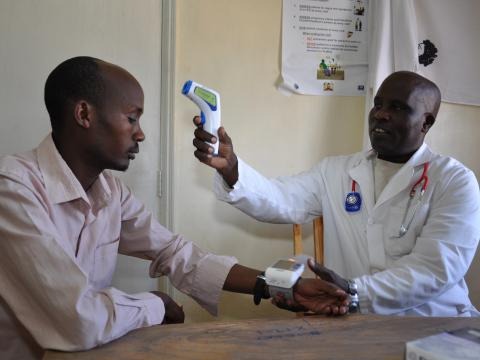
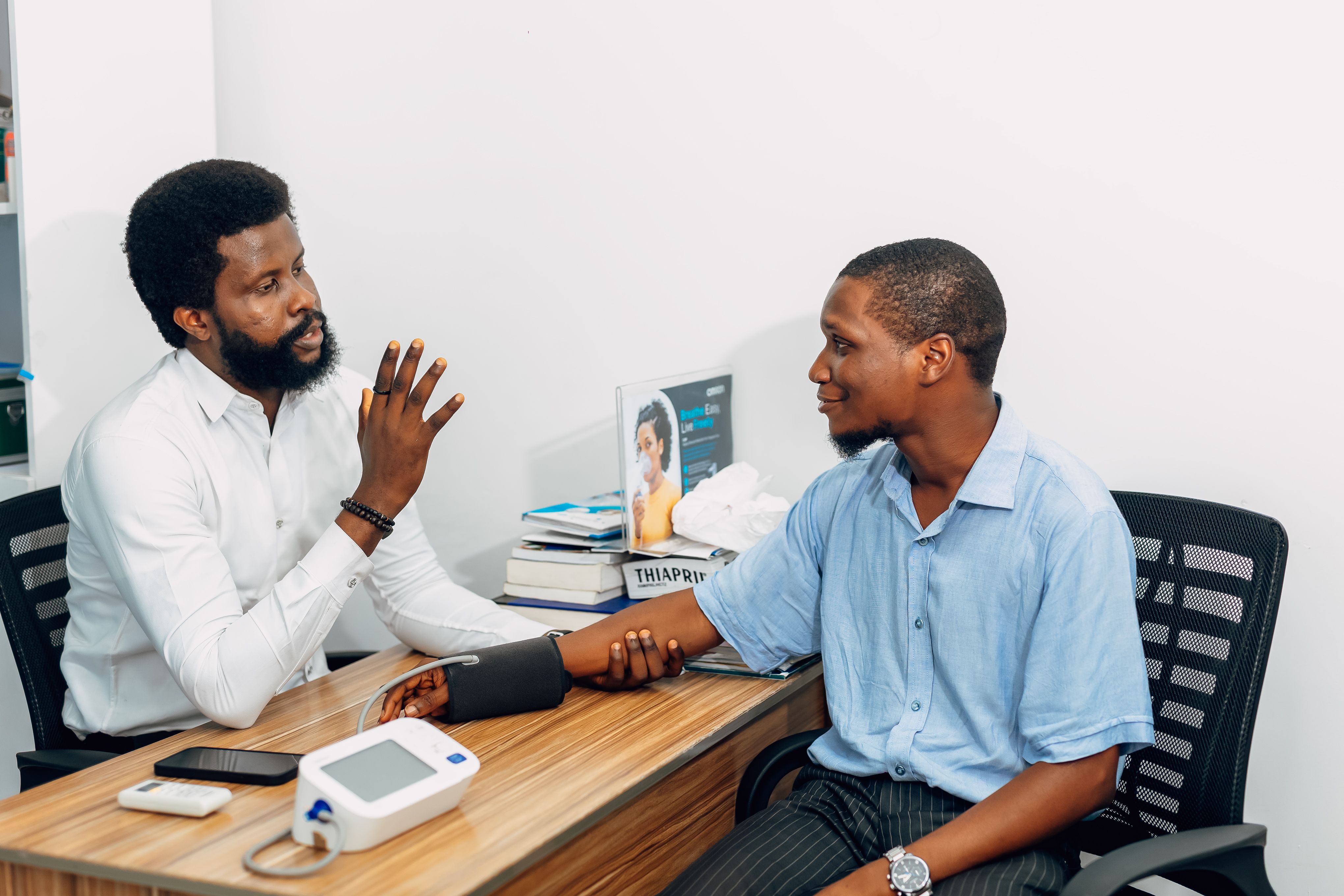
Get your blood pressure checked. Walk into any pharmacy or health centre. It takes two minutes. Know your numbers. If it's above 130/80, see a doctor.
Get a PSA test at 40. If you are 40 or older – or 35 if there is a family history of prostate cancer – ask your doctor for a PSA (Prostate-Specific Antigen) blood test. It is the primary early-detection tool for prostate cancer and is available at most private facilities and some public referral hospitals.
Get your blood sugar tested. Particularly if you are overweight, inactive, or have a family history of diabetes. A fasting blood glucose test is quick, cheap, and available widely under SHA.
Drink less alcohol. This is not a moral position — it is a clinical one. If you drink regularly and cannot easily imagine going without, that is information worth acting on.
Talk to someone. Not necessarily a therapist — though that is an option. A trusted friend, a family member, a pastor or religious leader. The act of naming what is wrong, out loud, to another human being is one of the most evidence-supported mental health interventions that exists. It costs nothing and it breaks the seal that silence creates.
Women read health content at significantly higher rates than men in Kenya. If you are a wife, mother, sister, or daughter reading this: you may be the person who puts this information in front of the man in your life.
Not by nagging — by sharing. Forward this article. Book the appointment with him. Go with him. Men are far more likely to act on health information when a trusted person in their immediate circle normalises it.
AfyaWatch254 Says: Strength Is Going, Not Waiting
The version of strength that kills Kenyan men is the version that measures endurance by how long you can ignore what your body is telling you.
Real strength is different. It is going to the clinic before the chest pain becomes a heart attack. It is getting the PSA before the prostate cancer becomes Stage 4. It is saying "I am not okay" before the silence becomes something permanent.
Kenya cannot keep building systems that detect disease and then lose men because they won't walk through the door. That is a cultural failure, and culture can change. It starts with one man making a different choice.