Epidurals In Kenya: The Truth About Painless Delivery — Myths, Costs, and Where To Get One
L
Leisure Collective
Author
262
0
0
Somewhere between the fear of paralysis and the belief that pain is just part of motherhood, thousands of Kenyan women are suffering through labour without knowing they had another option. Here is the honest, medically accurate truth about epidurals in Kenya.
Nobody prepares you honestly for labour pain. You hear "it's intense." You hear "you'll forget it once you hold your baby." You hear your mother say she did it without medication, and so should you.
What many Kenyan women are never told: there is a safe, WHO-recommended procedure that can significantly reduce — or nearly eliminate — labour pain, while still letting you feel contractions, push effectively, and stay fully present for your baby's birth. It's called an epidural. The reason more Kenyan women don't use it isn't that it's dangerous — it's that most have never been properly informed, and a lot of what circulates about it simply isn't true.
This article is medically verified. We're not here to push epidurals on anyone — only to make sure you can make a real, informed choice.
What It Actually Is
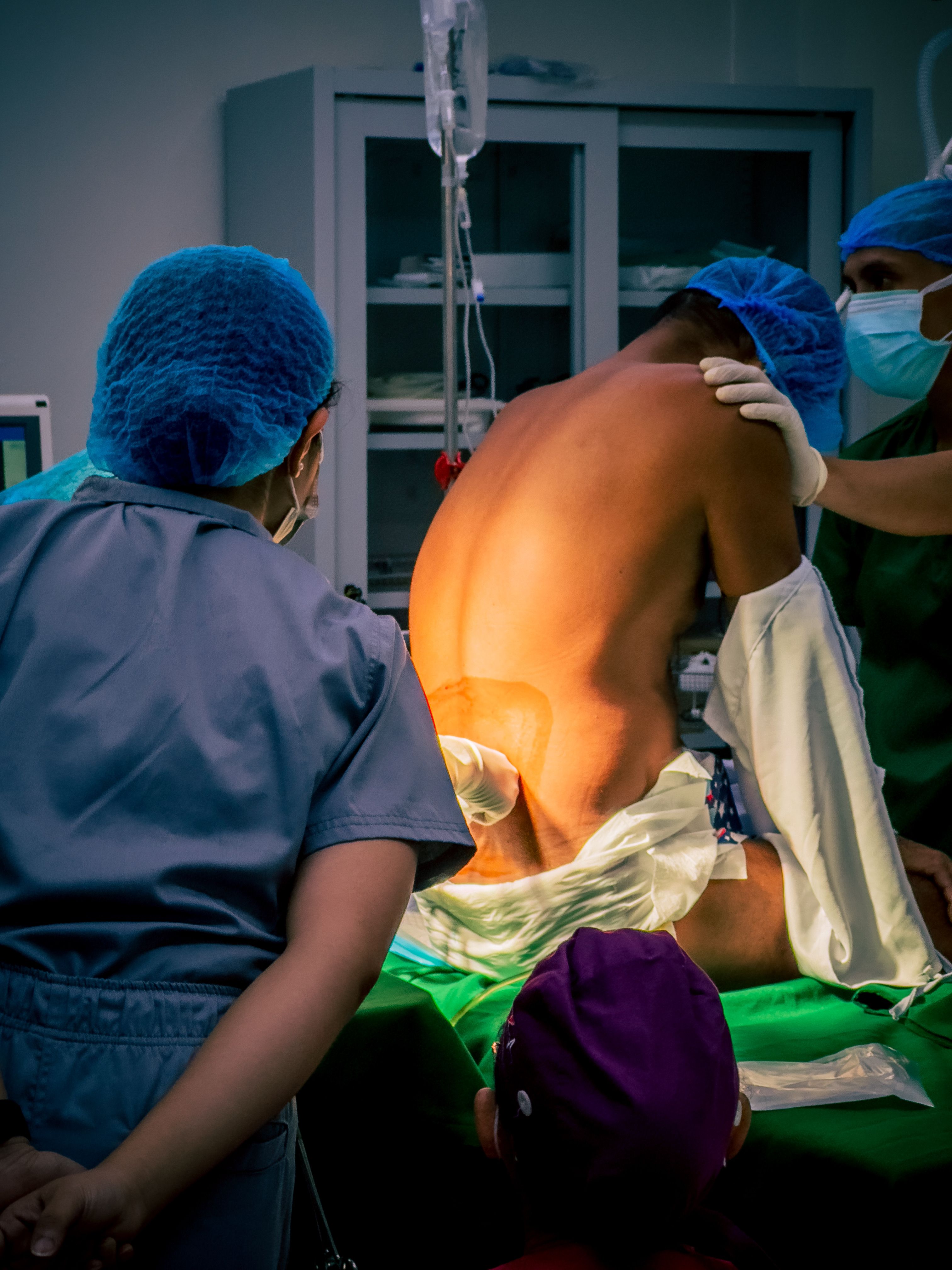
An epidural is regional anaesthesia placed by a trained anaesthesiologist. A thin needle inserts a small catheter into the epidural space — the outer part of the spinal canal in your lower back. The needle is removed; the catheter stays, delivering pain medication continuously or on demand through labour.
The medication numbs sensory nerves without removing all sensation — most women still feel pressure and the urge to push, fully awake and alert throughout. Placement takes 10–15 minutes; pain relief begins within 10–20 minutes. The WHO recommends epidural analgesia for healthy women who request it during labour. It is standard care, not an extreme intervention.
Epidurals carry more misinformation than almost any other procedure in maternal care, and Kenya's information gap makes it worse. Here's what the evidence actually says, fast:
"They cause permanent back pain" — Not true. Post-birth backache is extremely common in women with or without epidurals, driven by pregnancy itself, loosened ligaments, and newborn care strain. Mild injection-site soreness for a day or two is normal; long-term back pain is not linked to the procedure.
"They can cause paralysis" — The real numbers: permanent nerve damage occurs in roughly 1 in 50,000–100,000 cases; paralysis specifically, around 1 in 1,000,000. You are more likely to be struck by lightning. Temporary leg numbness after delivery is normal and resolves within hours.
"They harm the baby" — Very little medication crosses into the mother's bloodstream, and essentially none reaches the baby in clinically meaningful amounts. No credible research links epidurals to developmental harm.
"They lead to C-sections" — Not supported by evidence. A relaxed, pain-free mother may labour more efficiently, since extreme pain itself can slow dilation.
"You can't push with an epidural" — Modern low-dose "walking epidurals" preserve motor function. Most women feel pressure, not pain, and push effectively.
"Real women suffer through labour" — This is cultural, not medical, and it causes real harm. The WHO is explicit: labour pain is not necessary, and women have the right to request relief. Severe, unmanaged labour pain can raise blood pressure, reduce oxygen to the baby, and contribute to birth trauma. Choosing pain relief is informed decision-making, not weakness. Your birth, your body, your choice
Where to Get One in Kenya
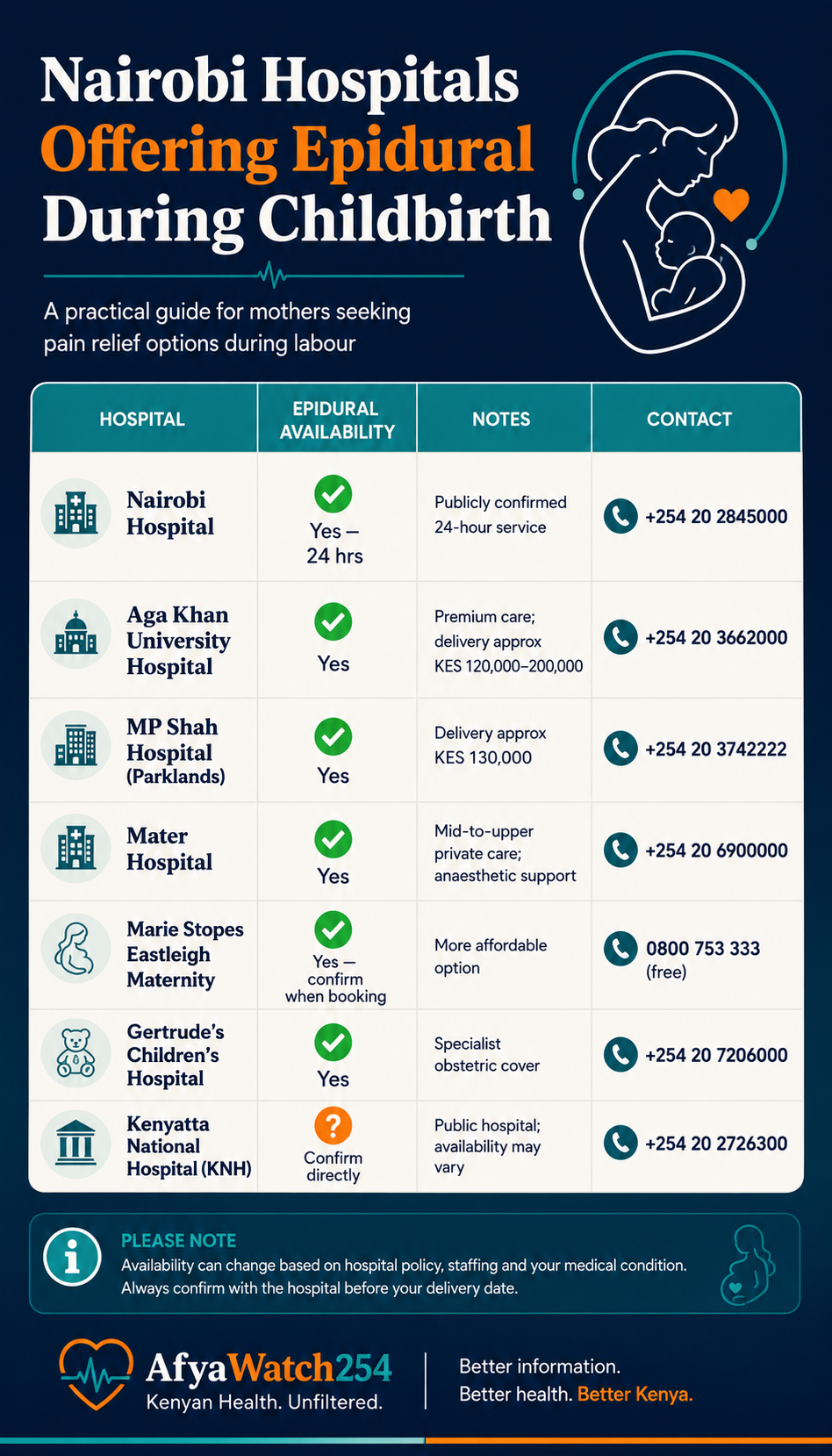
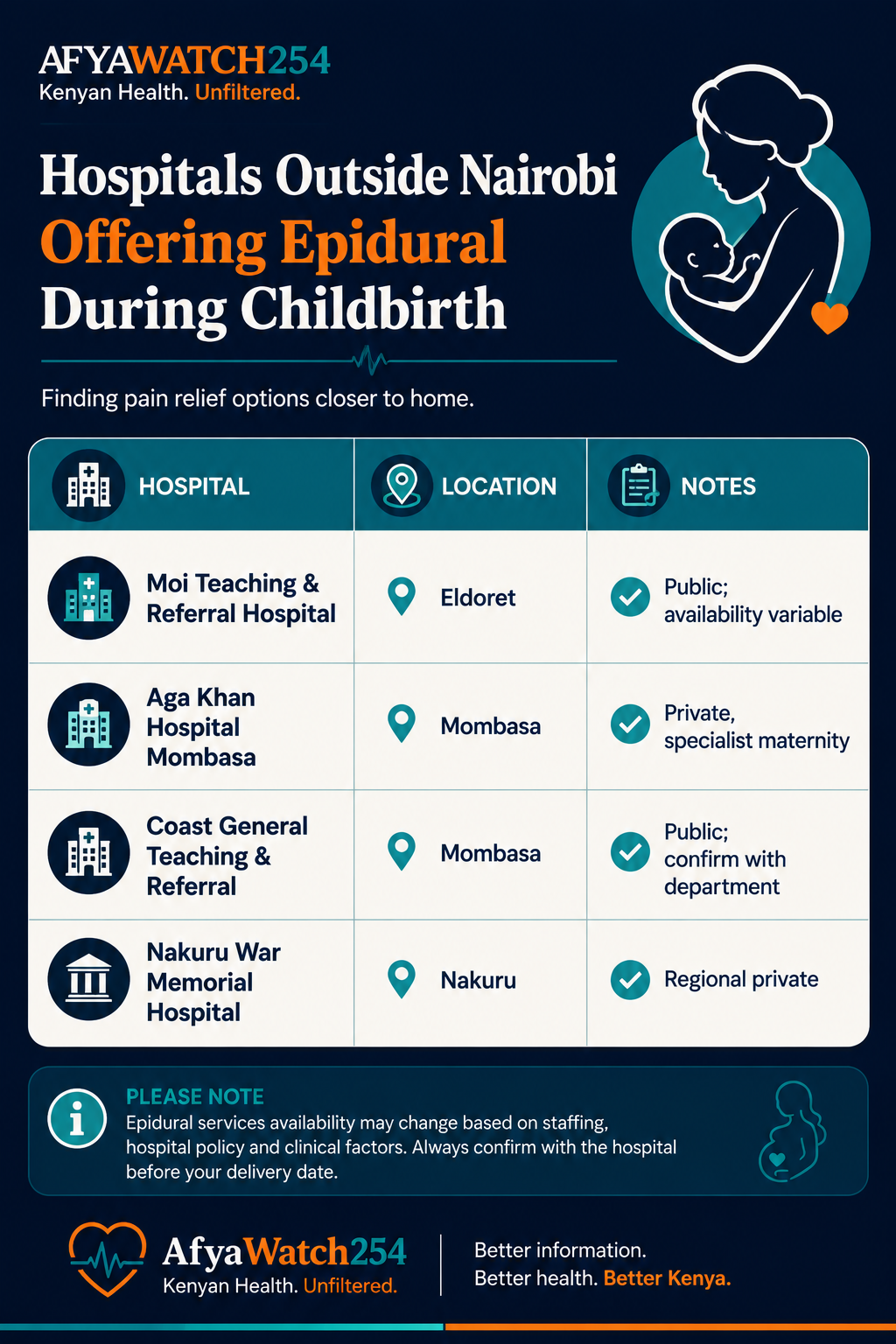
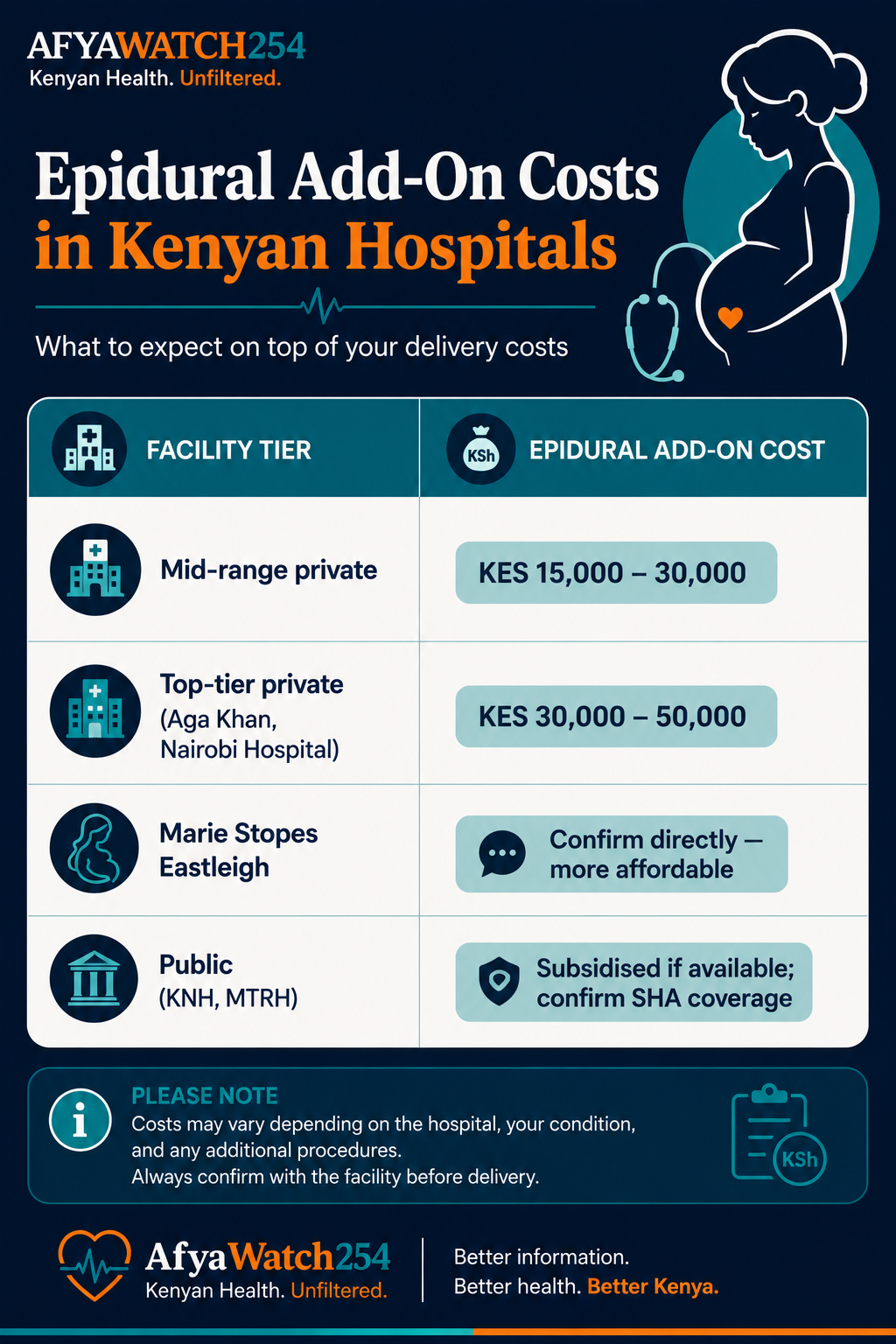
Epidurals require a qualified anaesthesiologist on call, which is why availability concentrates in mid-to-high-tier private facilities
⚠️ Public hospitals: availability depends on whether an anaesthesiologist is on duty when you go into labour — this cannot be guaranteed at KNH or MTRH. Call ahead and confirm.
Epidurals are not explicitly listed as a standard SHIF maternity benefit — coverage depends on how the facility codes the procedure, so ask your billing office directly. Most comprehensive private insurance covers anaesthesia under maternity benefits, but check whether your policy covers elective labour analgesia specifically, not just C-section anaesthesia.
Ask Your Provider
Before delivery day: Does this facility have 24-hour anaesthesiologist cover? At what point in labour can I request an epidural? Is it covered by my insurance or SHA, and if not, what's the cost? What happens if it doesn't fully work? Are there any conditions that would make me unsuitable?
AfyaWatch254 Says
You deserve to know your options before you're in the middle of labour. An epidural isn't the only path — gas and air, water immersion, breathing techniques are all valid, and some women choose unmedicated births and have great experiences. What's not okay is suffering through labour because no one told you there was a choice or refusing relief over a paralysis risk that's really one in a million.
Knowledge is the most important thing you can bring into a delivery room.