Your home is already smarter than you think — Samsung wants to show you how much smarter it can get
L
Leisure Collective
Author
89
0
0
Samsung is bringing its connected home ecosystem to Sarit Centre Nairobi from 2-4 October 2026. Here's what it actually means.
Here is a question worth sitting with: how many times this week have you walked back to the kitchen to check whether you left the fridge open? How many times have you guessed at the right washing machine cycle for a fabric you were not entirely sure about? How many times have you looked at your electricity bill and had genuinely no idea which appliance was responsible for the spike?
These are small frictions. Individually they are barely worth mentioning. But they accumulate across a day, a week, a month — and they are exactly the kinds of things that connected home technology was built to eliminate. Not with dramatic innovation, but with quiet, practical intelligence that makes the home a little easier to manage without asking you to change how you live.
From 2 to 4 October 2026, Samsung is bringing that intelligence to Sarit Centre in Nairobi, where its Connected Living Experience will let Kenyan consumers interact with a fully connected home ecosystem in person — seeing the living room, kitchen and laundry room working together as one system rather than a collection of separate devices.
The shift that is already happening
The conversation around smart homes has been happening for years, but the version most people imagined — voice commands to empty rooms, refrigerators ordering their own groceries — has always felt slightly science-fictional. What Samsung is demonstrating is considerably more grounded than that, and more useful for it.
The real shift in connected living is not the number of smart devices in a home. It is what happens when those devices talk to each other. A television, a smartphone, a refrigerator and a washing machine can each make a task easier on their own. But when they are connected within one ecosystem, they become part of something meaningfully different — a home that responds to your routines rather than requiring you to manage it.
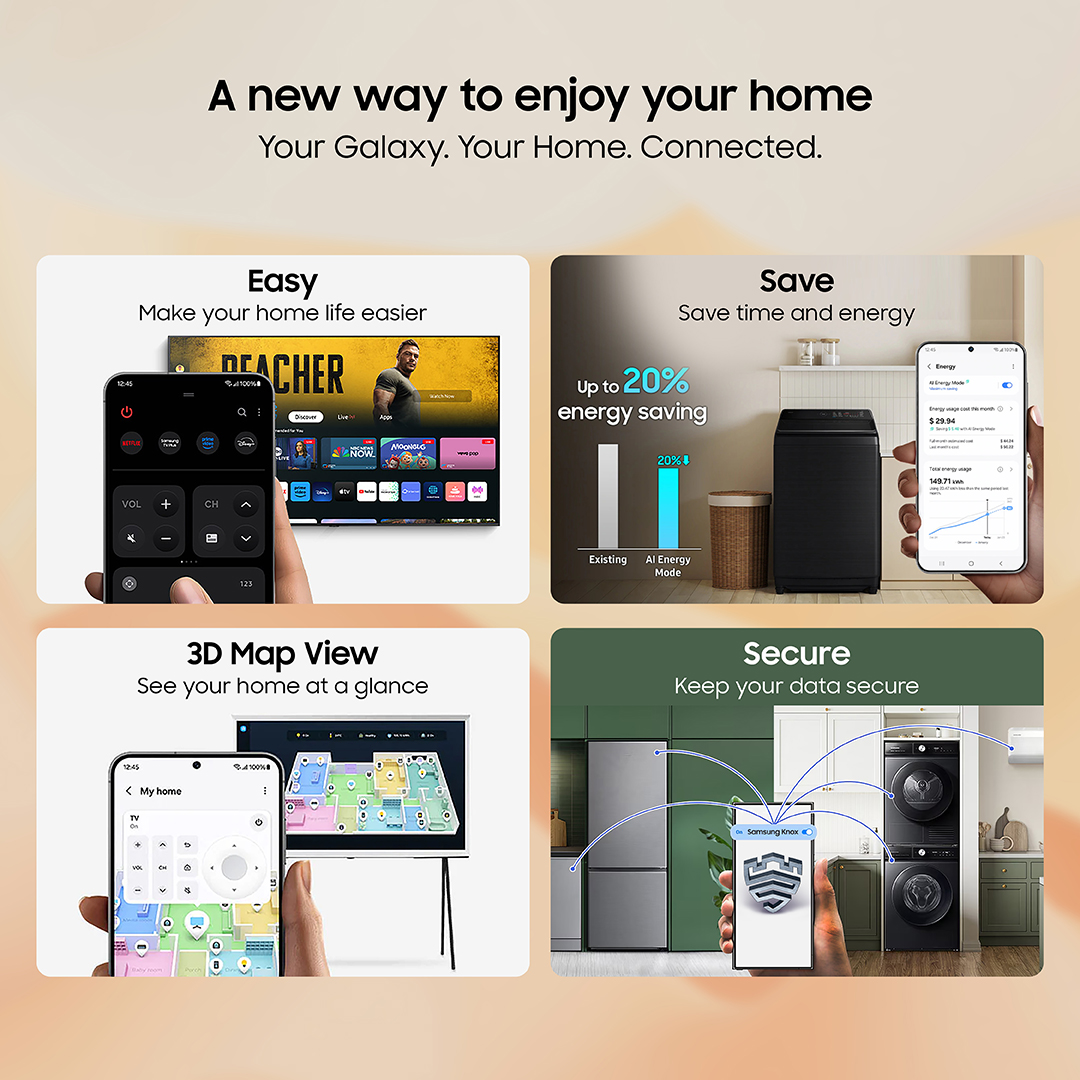
That ecosystem is Samsung SmartThings, and the October event at Sarit Centre is designed to make an abstract concept tangible. You can read about connected living on a screen. Walking through a kitchen where the fridge tells you it has been left open, a washing machine that recommends the right cycle for what is inside it and a TV that controls compatible appliances across the room is a different experience entirely.
In the kitchen: The refrigerator is no longer simply an appliance that keeps things cold. A connected Samsung fridge lets you adjust temperatures remotely, receive a notification if the door has been left open and track energy consumption over time. For the Nairobi household managing a busy morning routine, the difference between discovering a warm fridge at breakfast and having been alerted at 11 PM the night before is a meaningful one.
In the laundry room: Choosing the right cycle is one of those decisions that most people make by guessing and hope for the best. Samsung's Laundry Recipe feature removes the guesswork — suggesting the right programme for the fabrics in the drum. Auto Diagnostics identifies issues before they become problems. Load optimisation makes sure the machine is being used efficiently. These are not headline features. They are the kind of thing you notice every week when laundry feels noticeably less like a chore.
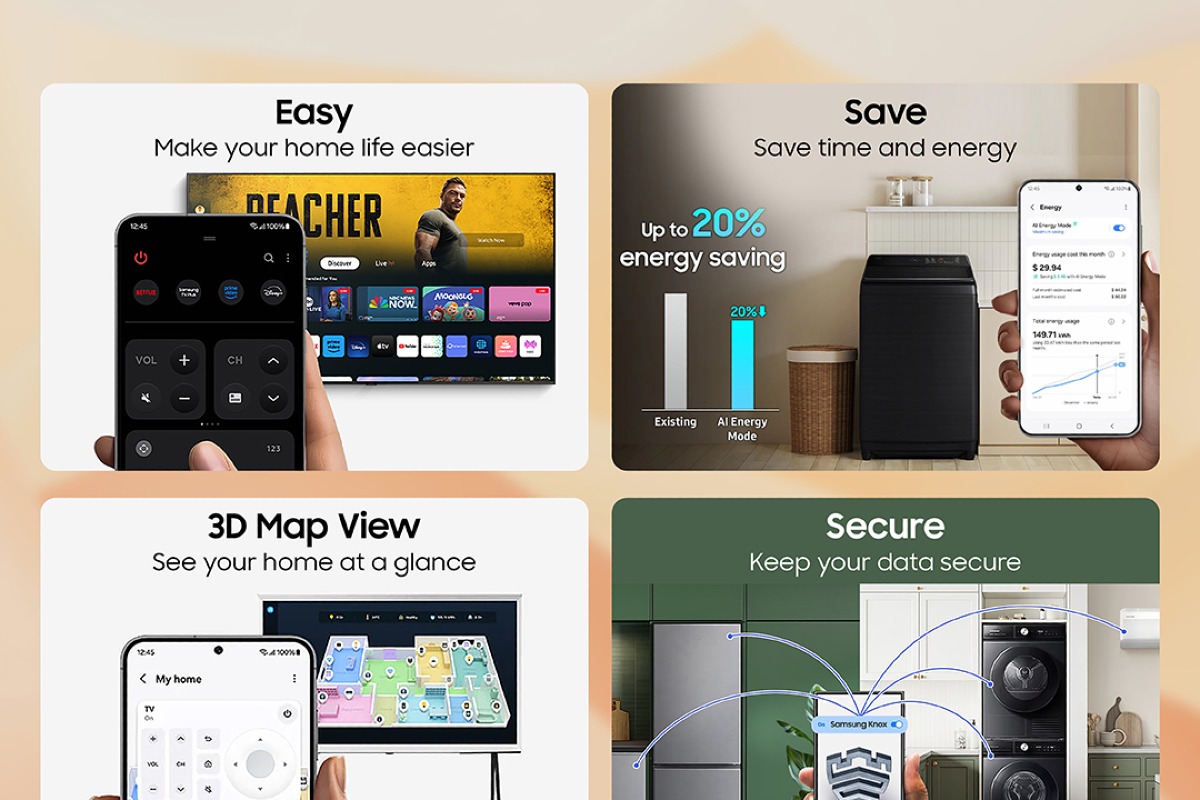
In the living room: Samsung TVs connect with Galaxy devices and compatible appliances through SmartThings, with 3D Map View giving you a visual layout of every connected device in your home and Quick Remote letting you control them without leaving the sofa. The living room becomes the control centre for the whole home rather than just an entertainment space.
On energy: This is the part of the connected home conversation that tends to get overlooked in favour of the more cinematic features, and it is possibly the most practically valuable. AI Energy Mode and energy consumption tracking across compatible appliances give you visibility into which devices are using the most power and when. For Kenyan households navigating rising electricity costs, that visibility is not a luxury. It is genuinely useful financial information delivered through an interface you already own.
Why now, and why Nairobi
Nairobi is one of the most technologically engaged cities in Africa. Mobile-first behaviour, early adoption of new digital tools and a professional class that expects technology to keep up with the pace of their lives — these are the conditions in which connected home technology is most likely to find an immediate audience.
Samsung's decision to bring the Connected Living Experience to Sarit Centre is a recognition of exactly that. The event is not a product demonstration in the conventional sense. It is an invitation to interact with a fully realised connected home environment and understand, in the context of your own daily routines, what the technology could actually do for you.
The SmartThings ecosystem that underpins the experience is the same one that connects Samsung's Galaxy devices, TVs and AI-enabled home appliances globally. What makes the Nairobi demonstration significant is that it translates a global product into a local conversation — one that starts from the routines Kenyan households actually follow rather than a generic vision of the smart home.
The Connected Living Experience
Dates: 2 to 4 October 2026 Venue: Sarit Centre, Westlands, Nairobi Entry: Open to the public
Visitors will be able to explore Samsung's connected ecosystem across the living room, kitchen and laundry room, seeing how Galaxy devices, TVs and AI-enabled home appliances work together through SmartThings. The experience is designed to be interactive rather than observational — the point is to understand connected living through doing rather than watching.
The future of the home is not about adding more technology to the spaces we already live in. It is about making the technology already around us more useful, more connected and easier to live with. The measure of good innovation is how naturally it disappears into everyday life. This October, Sarit Centre is where that measure gets put to the test.
For the latest news, please visit the Samsung Newsroom at news.samsung.com.