Renting in Nairobi (2026): What Nobody Tells You Before You Sign a Lease
L
Leisure Collective
Author
252
0
0
The rent is never just the rent. Real Nairobi renters told us what actually caught them off guard — from arbitrary water bills to the noisy business next door. Here's what to know before you sign.
The rent is never just the rent. Ask anyone who's moved in Nairobi in the last year, and you'll hear some version of the same story: the number on the listing is only the opening bid.
Overcharging happens all over, says Hilda, a Nairobi renter. Rent amount and space rarely match. And water bills are just vibes from the landlord — especially in houses that don't actually have water issues. If he decides to charge you 100 or 500 per unit used, that's entirely up to him.
Whether you're looking in South B, Kilimani, or Kasarani, one thing is becoming obvious: renting is getting more expensive — and not just because of monthly rent. In HassConsult's index of 18 established Nairobi suburbs — places like Karen, Kilimani, Westlands, and Lavington — average rents crossed KES 200,000 for the first time in Q1 2026, reaching KES 201,832. That figure only reflects that specific basket of higher-end suburbs, not Nairobi as a whole, but the same report shows satellite towns (Ruaka, Syokimau, Kitengela, and similar) hitting their own record high of KES 64,765 — a more useful comparison point if you're renting outside the established suburban core. For David, 33, who's rented in a few different Kenyan towns, the comparison is stark: Nairobi is simply more expensive than most.
You Will Always Trade Something Off
There's zero value for money, says Marion, a Nairobi renter who's also rented in Mombasa. You always have to settle for something — either a smaller kitchen or a smaller bedroom.
She also flags that lease agreement fees in Nairobi tend to run higher than in Mombasa. But Nairobi does win on one front: deposits. In Mombasa, she says, it's common to be asked for two months' deposit plus two months' rent upfront just to secure a house — a heavier lift than Nairobi's typical one-month deposit norm.
The takeaway: go in expecting a compromise somewhere. The question worth asking yourself before you view anything isn't "Is this perfect?" It's "Which trade-off can I actually live with?"
The Rent Map Isn't What You Think
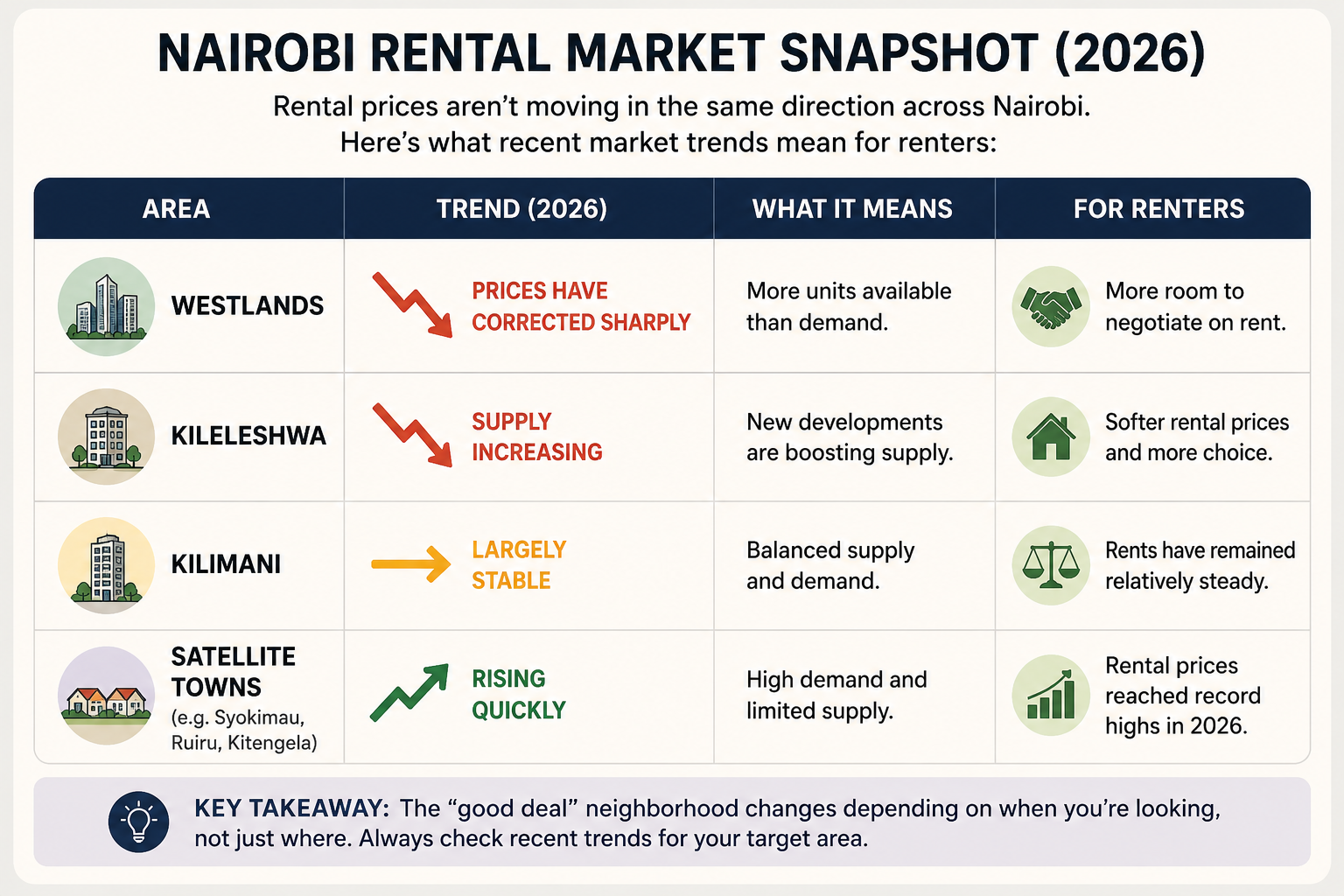
Even within the tracked suburbs, "Nairobi rent" isn't one number, and it isn't moving in one direction:
That means the "good deal" area changes depending on when you're looking, not just where, and if you're outside HassConsult's tracked suburbs altogether, in places like South B, Kasarani, or Eastlands, these figures are directional at best. It's worth checking current listings for your specific area rather than assuming any single citywide number applies to you.
The Hidden Cost of Moving
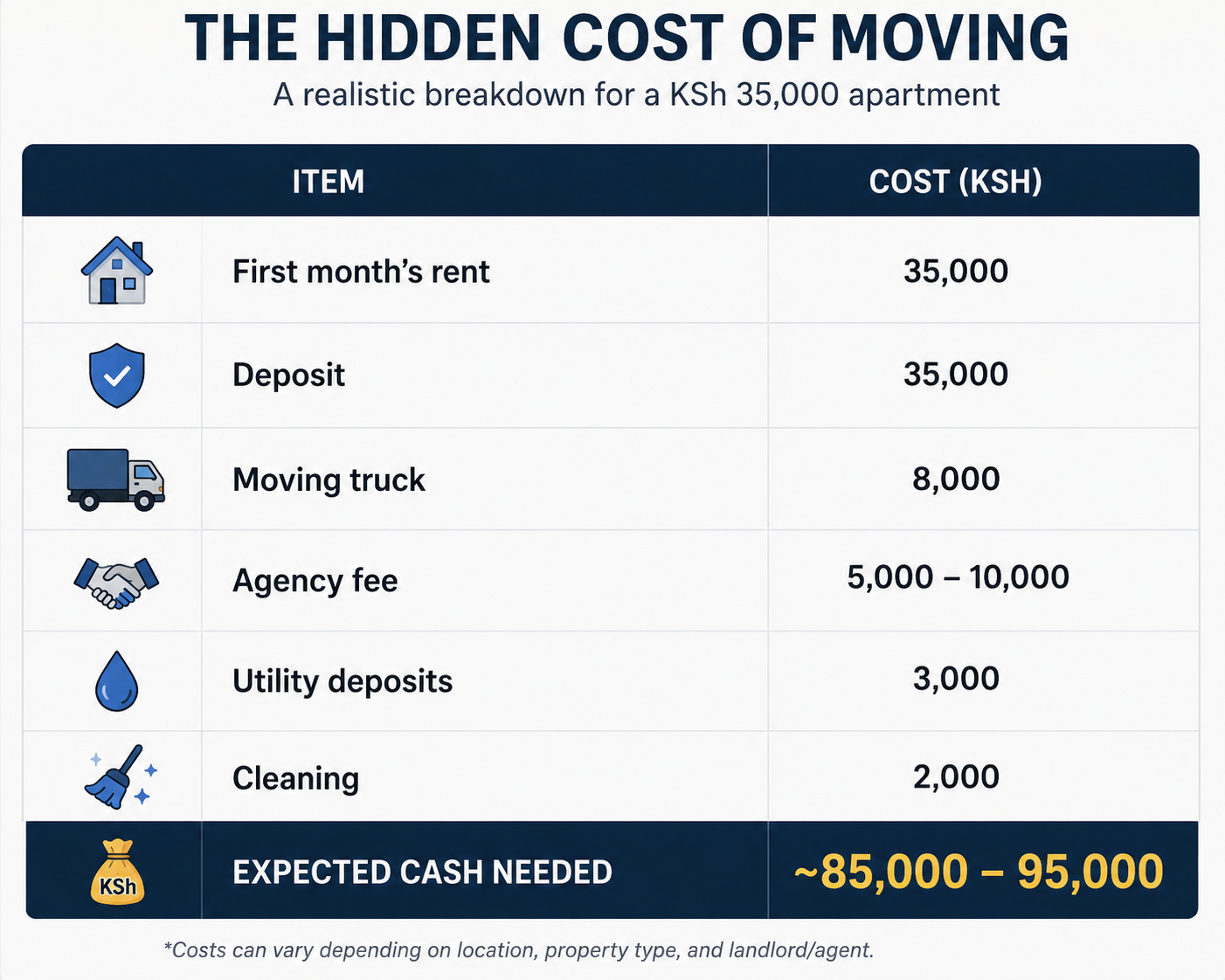
The rent is rarely the full cash outlay. Here's a realistic picture for a KSh 35,000 apartment:
Budget for the full number, not just the rent — this is the single most common way first-time renters get caught short.
The Scam Patterns You'll Actually Encounter
The pay-before-viewing trap — being asked to secure a unit you haven't seen, under manufactured urgency
The clone listing — a real listing's photos copied and reposted at a lower price to generate quick interest
The fake-emergency close — an "agent" suddenly unreachable or in a manufactured crisis, pushing you to send money anyway
The common thread: verify who actually manages the property, view the specific unit in person, and treat any request for money before a viewing as a hard stop.
Beyond scams and deposits, the things that catch people off guard are often more mundane — and more disruptive:
Don't house-hunt in a rush. "The mistake I didn't make again was moving in a rush," Marion says. "Because you ignore a lot of things — noise pollution, living next to a club or church." Her tip worth stealing: house-hunt during the rainy season if you can, so you actually see how flooded or filthy an area gets, rather than judging it on a dry, sunny viewing day.
What's next door matters more than you'd think. "Living next to a profitable open space — somewhere any business can set up, like a car wash, a church, or a wines-and-spirits joint — can be noisier than an actual club," Hilda says. Ask what's currently operating nearby and what's zoned to open there next.
Location affects more than commute time. David points to insecurity and access as bigger factors than people expect: renting on minor, less-visible streets can mean real safety and moving-logistics headaches, and proximity to hospitals and basic services matters more day-to-day than most people budget time to check before signing.
Lease length is a real decision, not a formality. "If you intend to stay a good while, sign longer leases," Hilda advises. "One year ends very fast" — and re-negotiating or re-searching annually has its own cost, in both money and hassle.
Agents don't stop once you've signed. Marion's other flag: the sheer persistence of rent reminders from agents once you're in — a small annoyance nobody warns first-time renters about, but one that adds to the sense that the relationship with your agent rarely ends at move-in.
Deposits: The Fight Nobody Warns You About
The most common recurring complaint among Nairobi renters is a deposit that quietly doesn't come back, or comes back short, justified by vague "damages". The fix is unglamorous but effective: photograph and video the apartment's condition both at move-in and move-out. It costs nothing and is the easiest way to protect yourself if a dispute escalates.
What Your Lease Should Actually Say
Before signing, confirm the agreement clearly states: deposit refund conditions, who's responsible for repairs, the required notice period, and whether subletting is allowed. If any of these are vague or missing, ask before you move in, not after.
Kenyan tenants are protected under the Landlord and Tenant Act framework — you're entitled to a liveable space, your landlord can't enter without consent once rent is paid, and unresolved disputes over deposits, rent hikes, or evictions can be escalated to the Rent Tribunal rather than argued out informally with an agent. Most tenants never use this route, not because it doesn't exist, but because nobody tells them it does.
Before You Sign: A Quick Checklist
View the actual unit, never just photos — ideally during the rainy season, to see how the area really holds up
Confirm who legally manages the property
Ask what businesses currently operate — or could open — next door
Check the street's safety and access to hospitals/services
Never pay before viewing
Photograph and video the unit's condition on move-in
Read the deposit, repair, and notice clauses line by line
Consider a longer lease if you plan to stay
Keep every receipt and message in writing
Expect a trade-off somewhere — decide in advance which one you can live with
Renting in Nairobi isn't just a transaction — it's a system most people learn by getting caught out once. Know the patterns, ask the right questions early, and the rent is the only surprise you'll have to budget for.